

In California, you generally have 120 days from the date a will is formally admitted to probate to file a contest. That window can also open earlier — objections to a will’s admission can be filed before the probate court holds its hearing, which is often the stronger procedural position. Either way, the clock is real, and missing it typically ends your ability to challenge the will permanently.
The most common misconception is that the deadline runs from the date of death. It does not. The trigger is probate admission — a specific court event that may happen weeks or months after a person passes. If you recently discovered a will you believe is invalid, the first question is not whether you have grounds, but whether the clock has already started. The Daily Jones and Company offers free consultations to help you determine exactly where you stand before that deadline passes.
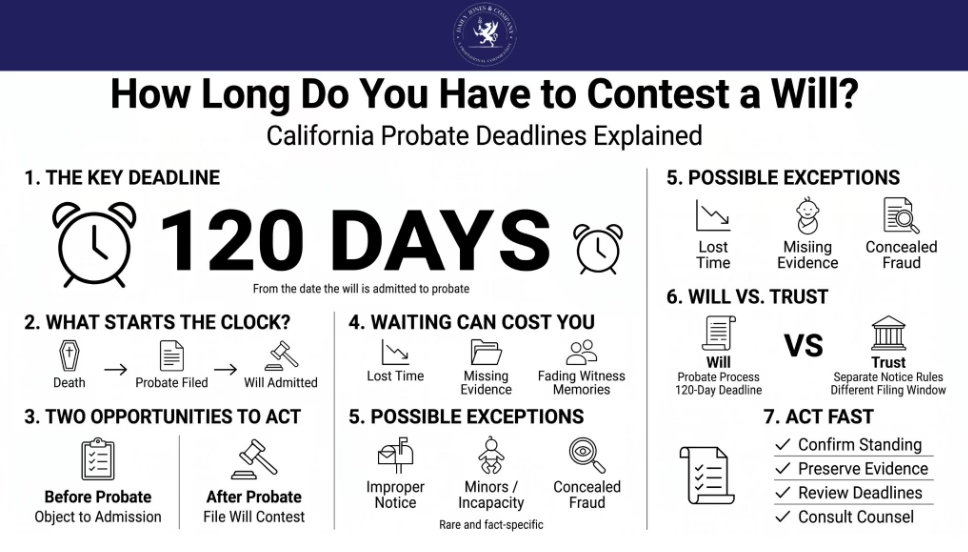
What Starts the 120-Day Clock?
The deadline is governed by California Probate Code § 8270, which sets 120 days from the date the court admits the will to probate — not from the date of death, not from the funeral, and not from when you received notice of the estate. The triggering event is the court’s formal order of admission.
Here is how that typically unfolds:
- Date of death — the decedent passes; the estate opens informally
- Probate petition filed — the executor petitions the court to admit the will and open probate
- Probate admission hearing — the court approves the will; this is the moment the 120-day clock begins
- 120-day deadline — the last date a formal contest can be filed
If the hearing occurred two months ago and you are only now learning about the will, roughly 60 days of your window may already be gone.
Contesting Before Probate vs. After Probate
Most articles focus exclusively on the post-admission deadline, but the earlier window is often more powerful. Before the court formally admits a will to probate, an interested person can file an objection to admission — a petition arguing the will should not be admitted at all. A successful pre-admission objection can stop probate from opening under that will entirely.
After probate has been admitted, the contest becomes a formal litigation matter requiring a petition, stated grounds, and a burden of proof under California Probate Code § 8252. The pre-admission window has no fixed deadline other than the date of the admission hearing itself, which makes early action — as soon as you learn of a questionable will — the strongest possible position.
What Happens If You Miss the Deadline?
California probate deadlines are jurisdictional. That means a court generally has no authority to hear a contest filed outside the 120-day window, regardless of the evidence or the strength of the claim. Late filings are not treated as procedural errors that can be corrected — they are treated as permanent bars to relief.
Once assets have been distributed following the close of probate, recovery becomes exponentially more difficult and is rarely available through a will contest. In some narrow circumstances — where fraud was concealed, proper notice was never given, or a party was legally incapacitated — limited remedies may exist. But these exceptions are fact-specific and difficult to establish. Treating the 120-day window as a hard cutoff, not an estimate, is the only safe approach.
Exceptions: Narrow and Fact-Specific
Improper Notice
California’s probate self-help resources outline formal notice requirements that executors must follow when opening probate. If proper notice was never served on an interested party, that party may have grounds to argue the deadline should not apply to them. This is not automatic — courts examine whether the person had actual knowledge of the probate proceeding regardless of formal notice.
Minors and Incapacitated Persons
Individuals who were minors or legally incapacitated at the time the probate deadline ran may have limited additional time to file once that disability is removed. These protections are narrow and require immediate legal evaluation once capacity is restored or the minor reaches adulthood.
Fraud-Based Claims
Where a will was procured through fraud that was actively concealed — a forged signature, a fabricated document, deliberate misrepresentation to the court — separate legal remedies outside the standard probate contest may be available. The threshold for these claims is high, and they are not a substitute for timely filing when the standard deadline applies.
Why Waiting Weakens Your Case
Even within the 120-day window, delay causes real harm to the quality of a will contest. Medical records and physician notes documenting a testator’s mental state near the signing date become harder to obtain and authenticate over time. Under California Probate Code § 6100.5, courts analyze testamentary capacity at the specific moment of execution — and the witnesses and caregivers who can speak to that moment have fading memories the longer a case waits.
Undue influence cases face the same problem. California Welfare and Institutions Code § 15610.70 evaluates patterns of isolation, dependency, and control — patterns documented by people whose accounts become less reliable with time. Financial records can also be moved, consolidated, or closed. Acting immediately after identifying a concern preserves evidence that delay destroys.
Will Contests vs. Trust Contests: Different Deadlines
A common source of confusion is the difference between contesting a will and contesting a trust. Wills go through the probate process, which triggers the § 8270 deadlines above. Trusts generally do not go through probate — they operate under a separate framework with their own notification and contest timelines.
In California, trustees are typically required to notify beneficiaries when they begin administering a trust, and beneficiaries generally have 120 days from that notification — or 60 days from receiving a copy of the trust — to file a contest, whichever is later. If the estate you’re dealing with involves a living trust rather than a probated will, the deadlines and procedures differ significantly. The Daily Jones and Company’s fiduciary abuse and trust litigation practice handles both.
Act Before the Deadline Closes Your Options
A will contest cannot be filed on good intentions alone — it requires standing, provable grounds, preserved evidence, and time. Under California Probate Code § 48, only interested persons with a financial stake in the outcome can file, which means confirming both your eligibility and your remaining time should happen in the same conversation.
James Daily and the litigation team at The Daily Jones and Company have spent more than 30 years handling probate disputes, fiduciary abuse cases, and trust contests for clients across California and internationally. If you believe a will is invalid and are uncertain whether the clock is already running, contact the firm for a free consultation — the sooner you act, the more options remain available.
Frequently Asked Questions
Is the 120-day deadline counted from the date of death?
No. The 120-day window under California Probate Code § 8270 begins when the court formally admits the will to probate — not from the date of death. Death may precede probate admission by weeks or months, depending on when the executor files the petition and when the court schedules the admission hearing.
Can you contest a will before probate opens?
Yes. Before the court admits a will to probate, an interested person can file an objection to admission. This is often the stronger procedural move — a successful pre-admission objection can prevent the will from being admitted at all. There is no fixed deadline for this window other than the date of the admission hearing itself.
What if I never received formal notice of the probate proceeding?
Executors are legally required to provide notice to interested parties when opening probate. If proper notice was never served, you may have grounds to argue the deadline should not have started running against you. However, courts also consider whether you had actual knowledge of the proceeding through other means. This is a fact-specific question that requires legal evaluation immediately.
Are there any exceptions to the 120-day deadline?
Exceptions exist but are narrow. Parties who were legally incapacitated or minors when the deadline ran may have limited additional time. Cases involving actively concealed fraud may support separate legal remedies. These situations require prompt legal assessment — they are not broadly available and should not be relied upon as a fallback for delayed action.
Is the deadline the same for contesting a trust?
No. Trusts do not go through probate and operate under a different notification framework. California trust contests are generally subject to a 120-day window from the trustee’s notification to beneficiaries, or 60 days from receiving a copy of the trust — whichever is later. If the estate involves a living trust rather than a probated will, the applicable deadlines and procedures differ significantly.
What happens to my claim if probate closes before I file?
Once probate closes and assets have been distributed, a standard will contest is generally no longer available. California’s probate deadlines are jurisdictional, meaning courts have no authority to hear late-filed contests. Recovery after distribution is rarely possible and requires exceptional circumstances. The 120-day window is not a guideline — it is the boundary of your legal options.
How quickly should I contact a probate attorney after discovering a questionable will?
Immediately. Even within the 120-day window, delay causes practical harm: witness memories fade, medical records become harder to obtain, and financial evidence can be moved or closed. An attorney can confirm how much time remains, assess whether you have standing and grounds, and begin preserving evidence before it disappears. Every week spent waiting is a week of the litigation window gone.