

“I was cut out.” “My sibling got everything.” “The trustee won’t tell me anything.” “Dad’s house disappeared.” These sound like one problem: a threatened inheritance. Legally, they can be five different problems, and the right first move depends on which one you’re actually facing.
The Daily Jones and Company represents heirs and beneficiaries across California in disputes over wills, trusts, and estate property.
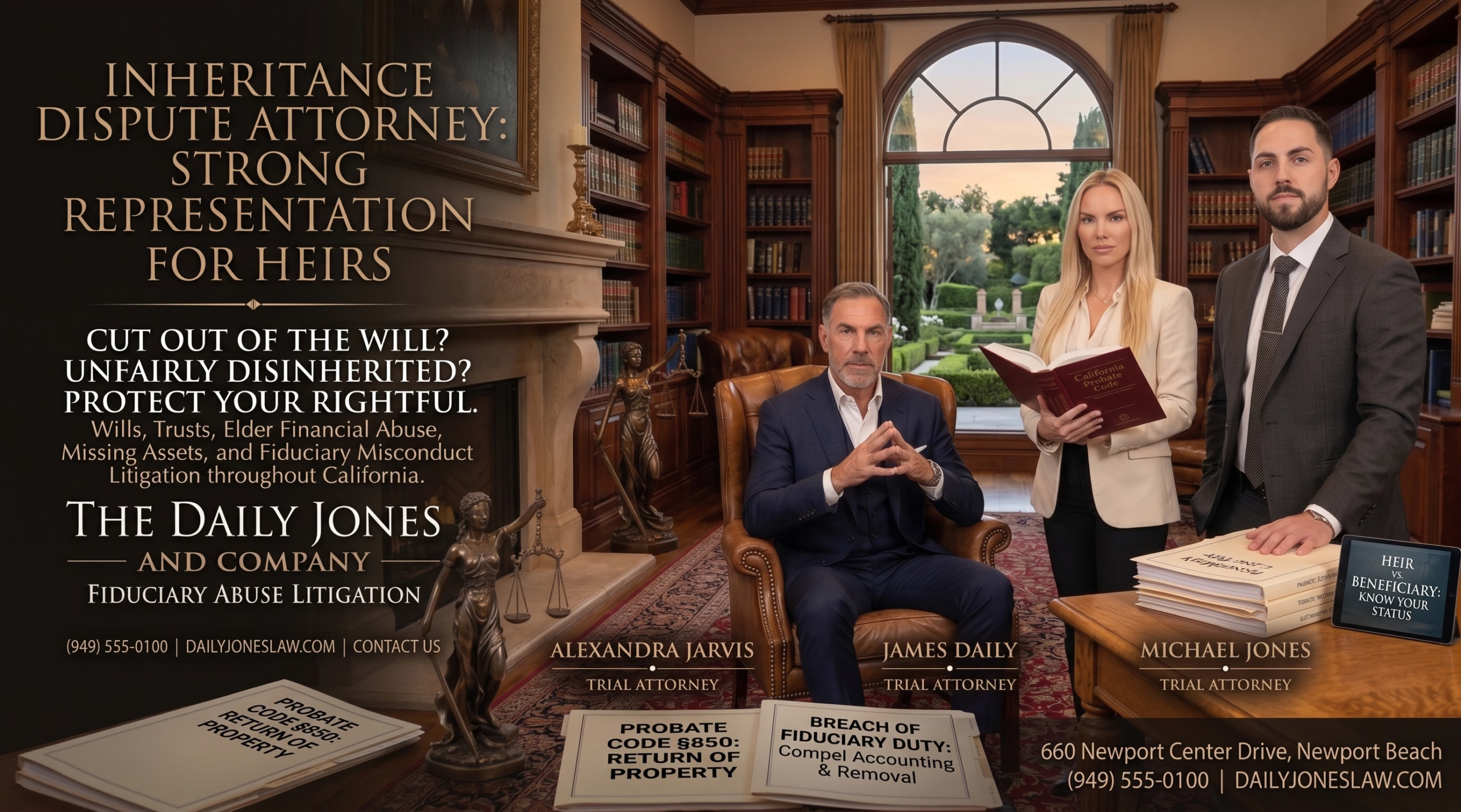
Are You an Heir, a Beneficiary, or Both?
California Courts distinguishes an heir, someone who would inherit under intestate succession, from a beneficiary, someone named in a will or trust. A “successor” is broader still: anyone legally entitled to property under a will or the Probate Code.
Someone can be all three, or named in an earlier document and cut from the current one. That distinction, more than the word “inheritance” itself, determines what kind of dispute exists.
Three Different Problems That Look the Same
Most disputes fall into one of three categories, and mixing them up wastes time.
The estate plan itself is wrong. The document shouldn’t control, because of lack of capacity, undue influence, fraud, forgery, or improper execution. This is a will or trust contest.
The document is fine, but the fiduciary isn’t following it. Failure to distribute, failure to account, self-dealing, missing assets, an improper sale. This is an administration dispute.
The parties disagree about what belongs to the estate at all. Someone transferred an asset, retitled it, or claims it was already a gift. This is a property-ownership dispute under Probate Code §§ 850–859, and it comes before, not after, the question of who inherits what.
Disputes Can Start Before Anything Is Distributed
Sometimes the first fight isn’t over who gets the house. It’s over who controls the estate while everything is sorted out. California sets an order of priority for who administers an estate, generally spouse before children before more distant relatives.
Complications arise when heirs disagree about who should serve, or the person with priority has an obvious conflict of interest. Being named executor is not the same as owning the estate; the role carries duties, not entitlement.
When Property Was Taken Before or Around the Death
This is often the strongest area of an inheritance case. A sibling’s name appears on a deed that used to be Dad’s. Money disappeared from an account. Someone says Mom gifted them the house. Before anyone can determine who inherits an asset, the court sometimes has to determine whether it belonged to the estate at all.
Probate Code § 856 lets a court order the property itself transferred back, not just damages paid, which matters when what you actually want is the house returned to the estate rather than its cash value. Where the taking was in bad faith, Probate Code § 859 can enhance the recovery, though ordinary disagreement over ownership is different from a proven bad-faith taking, and the two shouldn’t be conflated before the facts are in.
When a Gift Looks Suspicious
A caregiver suddenly receives the house. The person who prepared the trust amendment becomes a beneficiary of it. A late change removes longstanding beneficiaries entirely. Probate Code § 21380 creates a presumption against certain transfers to the drafter of the instrument or a care custodian.
An unusual inheritance isn’t automatically invalid, but who received it and their relationship to the person who died can shift the burden of proof.
When the Trustee Is the Problem
Sometimes the person controlling the inheritance is the obstacle to it. Before assuming a distribution is simply late, it’s worth asking whether one is actually due, whether the trustee has provided an accounting, and whether trust assets are at genuine risk.
Probate Code § 15642 allows removal for breach of trust or an inability to manage trust resources, and courts can take protective action to preserve assets while a removal petition is pending. Sometimes the fix isn’t a check to the beneficiary; it’s protecting the trust itself.
Don’t Set a Probate Notice Aside
A petition, a hearing notice, a proposed accounting, or a distribution filing is a request being made to the court, not paperwork the executor “has handled.” Ask what’s actually being requested, whether it affects your share, and whether there’s a deadline to object. Missing that window can end an argument before it starts.
“My Inheritance Is Missing” Isn’t One Legal Claim
| What You’re Experiencing | What the Legal Issue May Actually Be |
| “I was cut out.” | Will or trust validity, a late amendment, disinheritance |
| “My sibling got everything.” | Instrument terms, undue influence, asset ownership |
| “The executor won’t pay me.” | Estate administration and distribution |
| “The trustee won’t tell me anything.” | Beneficiary information and accounting rights |
| “Dad’s house disappeared.” | Property transfer, a § 850 proceeding |
| “They changed the trust before he died.” | Trust contest, capacity, undue influence |
| “There’s no will.” | Intestate succession |
| “They say I’m not an heir.” | Heirship and entitlement |
“Inheritance dispute” describes what you’re feeling. It isn’t the legal claim your attorney will actually bring.
An Unexpected Result Isn’t Automatically Wrongdoing
Being disinherited, treated unequally, or surprised by a document doesn’t by itself prove misconduct. A claim needs a legal basis: undue influence, lack of capacity, fraud, improper execution, breach of fiduciary duty, or wrongful transfer of property. That distinction protects your credibility if the matter goes in front of a judge.
What Preserving Your Position Looks Like
The first move is almost never to litigate. It’s to formally request information, in writing, and see what comes back. How the other side responds tells you more about the real strength of a case than anything said in a first meeting. Keep copies of earlier wills and trust amendments, any communications about the estate, and a timeline of when access to the parent changed and when documents were signed.
What an Inheritance Dispute Attorney Does
Depending on the facts, counsel may work to determine who is legally entitled to inherit, challenge or defend a will or trust, obtain financial records and accountings, trace a missing or transferred asset, seek a fiduciary’s removal, or negotiate a resolution before estate value is consumed by litigation. Strong representation doesn’t mean trial regardless of the facts. It can mean getting the accounting that resolves the dispute without one.
The Attorneys Who Handle These Cases
James D. Daily, Esq. has spent more than 30 years litigating fiduciary abuse, trust disputes, and beneficiary claims throughout California. He organizes these cases around a recurring shape: a late-arriving figure who displaces the natural family, a fiduciary who becomes the problem, or siblings turning on each other over unequal treatment, because naming the pattern early determines what evidence to go get first.
Michael Jones, Esq. focuses on fraud, theft, and breach of fiduciary duty, with a decade of state and federal court experience that shapes how disputed transfers and missing assets get traced and evidenced.
Alexandra Jarvis, Esq. brings real estate and trial experience to disputes where the disputed asset is a piece of property rather than a percentage on paper. She earned her J.D., with distinction, from UC Irvine School of Law and has practiced in California since 2019.
Contact The Daily Jones and Company
An inheritance problem rarely announces itself clearly. Contact the firm to find out which of these situations actually describes yours, and what protecting it looks like from here.
Frequently Asked Questions
Can I inherit if there was no will?
Yes, potentially. California’s intestate succession rules determine who inherits when someone dies without a valid will, generally starting with a surviving spouse and children before more distant relatives.
My sibling says Dad gave them the house before he died. What now?
That’s a property-ownership question, not a percentage dispute. California has a specific procedure for determining whether a disputed asset actually belongs to the estate before anyone calculates shares.
Does an unusual gift to a caregiver automatically get thrown out?
No. It creates a presumption that shifts the burden to the recipient to show the transfer was legitimate, particularly where they drafted the document or served as a care custodian. It isn’t automatically invalid.
What if I’m the executor and my own sibling is the one causing problems?
Serving as executor doesn’t give you ownership of the estate, and it doesn’t shield you from a beneficiary’s right to information either. The administrative role and the inheritance itself are separate questions.
Is it worth requesting information before hiring a litigation attorney?
Often, yes. A written request for an accounting starts a clock and creates a record. How the other side responds usually reveals more about the real strength of a dispute than anything else at that stage.
Does “unfair” mean I have a case?
Not by itself. The document generally controls unless there’s an actual legal ground, capacity, undue influence, fraud, or improper execution, to challenge it. Feeling treated unfairly isn’t the same as having grounds to contest.
Will this end up in a trial?
Not necessarily. Many disputes resolve once an accounting or missing records surface. Litigation is one tool among several, used where negotiation and information requests haven’t resolved the underlying problem.