

A mother and father lost their daughter to suicide. In the days after, they learned she had been under psychiatric care and taking a prescription drug when she died. They said out loud, more than once, that they thought somebody might have done something wrong. Six years later, they sued the drug company. The California Supreme Court held their claim was too late — not because they had waited to gather proof, but because they had admitted to suspecting that someone had done something wrong.
Suspicion started the clock. Not proof. Not the autopsy. Not the day they finally understood what happened. That case is Norgart v. Upjohn Co. (1999) 21 Cal.4th 383, and it is still the law. If you suspect, assume the clock is already running. Contact The Daily Jones and Company for a free consultation before the window closes.

The Two-Year Rule: What California Law Says
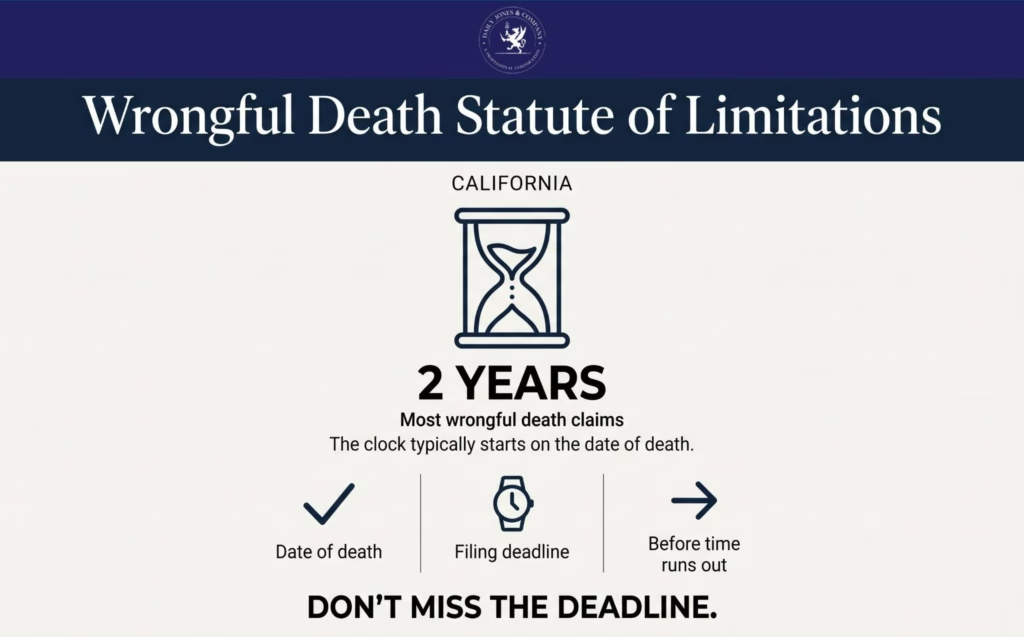
California Code of Civil Procedure § 335.1 sets the general two-year statute of limitations for wrongful death. In most cases the clock begins on the date of death, not the date of the accident or injury that caused it. Families who count two years from the accident date file months late and never get to the merits.
When the Clock Starts Later — and Why You Shouldn’t Count On It
The delayed discovery rule can postpone accrual until a plaintiff discovers, or has reason to discover, the cause of action. The Norgart parents still lost. Accrual is delayed only while you are genuinely and blamelessly ignorant. The moment you suspect, or reasonably should suspect, that someone’s conduct caused the death, the period begins. If you are reading this page because something about the death feels wrong, that feeling is itself evidence the clock has started.
Wrongful Death vs. Survival Actions
These are two distinct claims California treats separately, and most pages blur them.
| Wrongful Death | Survival Action | |
| Who brings the claim | Surviving family members | Estate of the deceased |
| Purpose | Compensates survivors for their own losses | Continues claims the deceased could have brought |
| Recoverable losses | Loss of financial support, companionship | Medical expenses, lost earnings before death |
| Statutory basis | CCP § 335.1, § 377.60 | CCP § 377.30, § 377.34 |
Both claims usually arise from the same death, and a family pursuing only one may be leaving substantial recovery on the table.
Important 2026 Update: Survival Damages Have Changed
Senate Bill 447 temporarily allowed a decedent’s pre-death pain and suffering to be recovered in a survival action under CCP § 377.34 — but only for cases filed on or after January 1, 2022 and before January 1, 2026. That window closed January 1, 2026 and was not extended. For a survival action filed today, the decedent’s pain and suffering is generally not recoverable. Economic losses before death still are. This can change the value of a case significantly.
The One-Action Rule: Why Your Sibling’s Lawsuit Is Your Problem
California treats a wrongful death action as joint, single, and indivisible. Cross v. Pacific Gas & Electric Co. (1964) 60 Cal.2d 690 states what that means: there is one lawsuit for your family member’s death. If one heir files and you are not part of it, you generally cannot file your own case later. An heir who will not join as a plaintiff must be named as a nominal defendant. If you have heard that anyone in your family has retained counsel or filed anything, find out immediately whether you are named.
Exceptions and Special Deadlines
Government Entity Claims
When the defendant is a public entity, Government Code § 911.2 requires an administrative claim within six months of death. If the agency sends a written rejection, Government Code § 945.6 gives you only six months from that rejection to file suit — not two years. Families receive a denial letter, assume the two-year period still applies, and lose the claim while the letter sits in a drawer.
Asbestos and Toxic Exposure
CCP § 340.2 governs asbestos-related wrongful death claims and ties the period to discovery rather than date of death. CCP § 340.8 applies to toxic exposure claims. In both categories the clock may run from when a plaintiff knew or reasonably should have known the death was caused by the exposure.
Claims Involving a Deceased Defendant
If the responsible party has also died, CCP § 366.2 imposes an outside limit of one year from that defendant’s death. Courts apply it strictly, even if the claimant did not know the defendant had died.
Medical Malpractice
Wrongful death arising from medical negligence runs on its own framework under CCP § 340.5. If a hospital or physician is involved, do not assume you have two years.
What Happens If the Deadline Is Missed
Courts will dismiss a wrongful death lawsuit filed after the applicable deadline, and compelling evidence does not change that. Insurance negotiations do not pause the clock — an adjuster returning calls or discussing settlement does not toll the statute of limitations. Families who wait politely for an offer that never comes are the ones who end up time-barred.
Documents to Gather Immediately
- Official death certificate
- Police or incident reports
- Medical records and any autopsy report
- Photographs of the scene, injuries, or property damage
- Insurance information for all parties, including any written rejection from a government agency
- Witness names and contact information
- Employment and income records of the deceased
- Funeral and burial expense records
The Attorneys Who Handle These Cases
James D. Daily, Esq.
James Daily has spent more than 30 years representing clients in wrongful death and personal injury matters, including complex cases in state and federal courts involving catastrophic losses and multi-party liability. He leads litigation personally and is known for his trial skills and ability to connect with fact-finders in high-stakes proceedings.
Michael Jones, Esq.
Michael Jones brings a decade of state and federal court experience to wrongful death litigation, with a background that includes working alongside the FBI, U.S. Marshals, and district attorney offices. His forensic approach to evidence and understanding of how investigations unfold inform how he builds and litigates claims for surviving families.
Alexandra Jarvis, Esq.
Alexandra Jarvis is a trial attorney with a background in business litigation and complex dispute resolution. Before joining Daily Jones and Company, she practiced at Call and Jensen, one of Southern California’s premier litigation boutiques. She earned her J.D., with distinction, from UC Irvine School of Law and has been admitted to practice in California since 2019.
Contact The Daily Jones and Company
The deadline is the one part of this you can still control. Everything else — what the evidence shows, what the insurer offers, what a jury decides — is downstream. The filing date is upstream, and once it passes, none of the rest of it matters. The parents in Norgart had a real case. A court never reached it.
The Daily Jones and Company represents surviving families in wrongful death and survival actions throughout California. If someone’s negligence or wrongdoing cost you a family member, contact the firm for a free consultation before the filing deadline forecloses your options.
This page is general information about California deadlines, not legal advice about your case. Limitations periods vary with the facts, the defendant, and the theory of liability.
Frequently Asked Questions
What is the statute of limitations for wrongful death in California?
Under CCP § 335.1, most wrongful death claims must be filed within two years of the death. Exceptions apply to government entity claims, asbestos and toxic exposure cases, medical malpractice, and situations where the responsible party has also died.
Does the deadline start on the date of the accident or the date of death?
In most cases the two-year period begins on the date of death, not the date of injury. Counting from the accident date is among the most common and costly errors families make.
What if we didn’t know right away that someone was at fault?
Under Norgart v. Upjohn Co. (1999) 21 Cal.4th 383, a claim accrues once the plaintiff suspects, or has reason to suspect, a factual basis for its elements. The parents in Norgart lost because they had admitted suspecting wrongdoing — and suspicion is enough. Treat the clock as running from the moment something felt wrong.
Can my sibling and I file separate wrongful death lawsuits?
No. California treats a wrongful death action as joint, single, and indivisible — there is only one action for the death (Cross v. Pacific Gas & Electric Co. (1964) 60 Cal.2d 690). If a family member has already filed, find out immediately whether you are named.
Can my family still recover for my loved one’s pain and suffering before death?
Generally no, for cases filed now. SB 447 temporarily allowed that recovery under CCP § 377.34, but only for cases filed before January 1, 2026. That authorization expired and was not extended. Economic losses before death remain recoverable in a survival action.
What are the deadlines if a government agency is responsible?
Government Code § 911.2 requires an administrative claim within six months of death. If the agency issues a written rejection, Government Code § 945.6 gives you only six months from that rejection to file suit — not two years.
What if the person responsible also died?
CCP § 366.2 imposes an outside limit of one year from that person’s death. Courts apply it strictly, even if you did not know the person had died.
Who can file a wrongful death lawsuit in California?
Under CCP § 377.60, primary claimants are the surviving spouse or registered domestic partner and the decedent’s children. If no spouse or children survive, other heirs may have standing. Because only one action may be brought, identifying every eligible heir at the outset is essential.
What happens if the filing deadline is missed?
Courts dismiss wrongful death lawsuits filed after the limitations period has run, permanently closing the path to civil recovery. Narrow doctrines can excuse a late filing in specific circumstances, but they require immediate evaluation.
How long does a wrongful death lawsuit typically take?
Cases resolved through mediation can conclude in months to a couple of years. Cases that proceed to trial typically take two to four years from filing.