

Contesting a trust means asking a probate court to invalidate part or all of a trust document — or to hold a trustee accountable for how they’ve administered it. The grounds include undue influence, fraud, lack of mental capacity, improper execution, and trustee misconduct. Unlike a will contest, trust litigation operates under its own procedural framework, with separate deadlines, different filing requirements, and a broader range of possible claims.
If a trust you’re involved in was recently amended in suspicious circumstances, names an unexpected beneficiary, or is being administered by a trustee who isn’t providing information or accountings, you may have a viable legal claim. The Daily Jones and Company’s fiduciary abuse and trust litigation team handles exactly these matters — contact the firm for a free consultation to assess your position before California’s trust contest deadlines run.
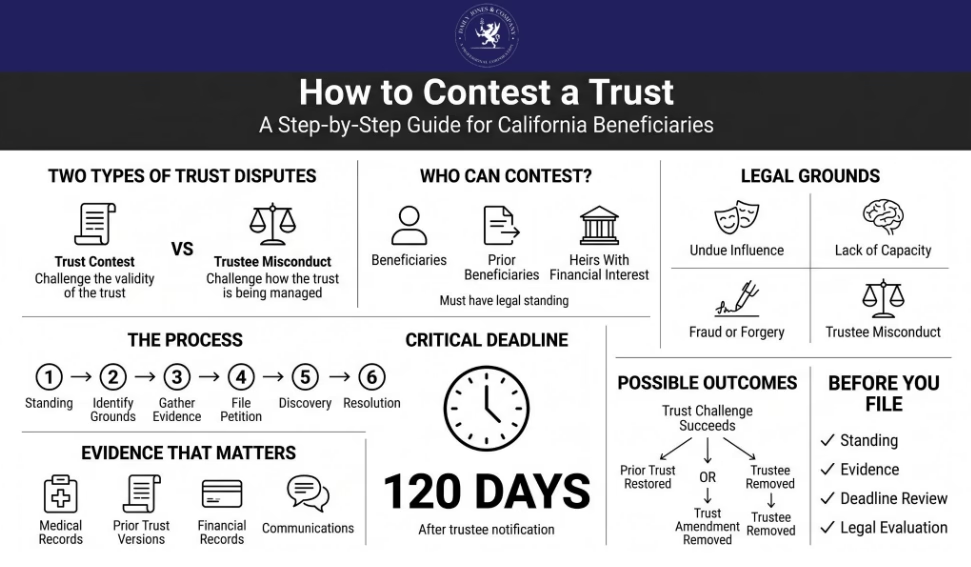
Trust Contests vs. Trustee Misconduct
Two legally distinct claims often get conflated. A trust contest challenges the validity of the trust itself — based on incapacity, undue influence, or fraud at signing. A trustee misconduct claim challenges administration after the fact: hidden assets, self-dealing, failure to account, or improper distributions.
Both can be brought under California Probate Code § 17200, which gives probate courts jurisdiction over internal trust disputes. In many family cases, both claims exist simultaneously. Which type you have determines the evidence required, relief available, and applicable deadlines.
Who Can Contest a Trust?
You must have a financial stake in the outcome. Qualifying parties typically include current and remainder beneficiaries, heirs who would inherit under intestate succession if the trust were invalidated, and beneficiaries from a prior version who would benefit if a later amendment were set aside.
California Probate Code § 48 defines the “interested person” standard, and courts apply it strictly. Confirm your standing with a trust litigation attorney before taking any other step.
Legal Grounds for Challenging a Trust
Undue Influence
Undue influence is the most commonly litigated ground in trust contests, particularly in cases involving elderly settlors and caregivers or family members with close access. California Welfare and Institutions Code § 15610.70 evaluates four factors: the settlor’s vulnerability, the influencer’s authority or control, the tactics used, and whether the outcome is inequitable.
Trust amendment cases are especially susceptible to this claim. A settlor who lived alone, depended on a caregiver for daily needs, and signed a new amendment cutting out longtime beneficiaries shortly before death presents a pattern courts take seriously.
Lack of Capacity
California Probate Code § 6100.5 requires that the settlor understood the nature and extent of their property and their natural heirs at the time they signed. A dementia diagnosis is not automatic grounds for invalidation — courts analyze the specific moment of execution, not general cognitive decline.
Medical records, physician notes, and caregiver logs from the period immediately before and after signing are the most critical evidence in capacity challenges.
Fraud, Forgery, and Improper Execution
Fraud applies when the settlor was deceived about what they were signing or about facts material to their decisions. Forgery involves a fabricated document or signature. Improper execution covers trusts or amendments that were not signed or witnessed in accordance with California’s formal requirements.
These grounds apply equally to trust amendments — a targeted amendment that changes beneficiaries or distribution percentages can be challenged on the same basis as the original trust document.
Trustee Misconduct and Breach of Fiduciary Duty
Under California Probate Code § 16060, trustees have a statutory duty to keep beneficiaries reasonably informed about the trust and its administration. Violations of this duty — withholding accountings, concealing transactions, self-dealing — are actionable under California Probate Code § 16420, which provides remedies including damages, surcharge, and trustee removal.
Trustees who delay distributions, favor one beneficiary over others without authorization, or use trust assets for personal benefit are committing breaches that courts take seriously.
The Step-by-Step Trust Contest Process
| Step | Action |
| 1. Confirm standing | Verify you qualify as an interested person under § 48 |
| 2. Identify grounds | Determine whether you’re challenging validity, an amendment, or trustee conduct |
| 3. Request trust documents | As a beneficiary, you have a right to a copy of the trust under § 16060 |
| 4. Preserve evidence | Gather medical records, financial records, prior trust versions, and communications immediately |
| 5. Consult a trust litigation attorney | Assess strength of grounds, standing, and deadline status before filing |
| 6. File a probate court petition | Petition filed under § 17200 in the court with jurisdiction over the trust |
| 7. Enter discovery | Subpoenas, depositions, expert witness preparation |
| 8. Mediation or settlement | Many trust disputes resolve here; full trial is the exception, not the rule |
| 9. Trial and judgment | If unresolved, the court hears evidence and issues a ruling |
California Trust Contest Deadlines
Trust deadlines differ from will contest deadlines and are among the most misunderstood aspects of trust litigation. Under California Probate Code § 16061.7, trustees are required to notify beneficiaries and heirs after a settlor’s death. That notification triggers the contest window.
California Probate Code § 16061.8 sets the deadline at 120 days from the date the trustee’s notice was served, or 60 days from the date you received an actual copy of the trust — whichever is later. Missing this deadline typically bars a trust contest permanently. Unlike some probate deadlines, courts have very limited tolerance for late filings under this framework.
What Evidence Courts Look For
Evidence in a trust contest falls into two categories: evidence challenging the validity of the document, and evidence of trustee misconduct in administration.
For validity challenges, the most useful evidence includes medical records and physician notes from near the signing date, prior versions of the trust showing how beneficiaries were treated historically, communications between the settlor and the influencer, and attorney drafting notes from the signing meeting. For trustee misconduct claims, the focus shifts to financial records, trust accountings — which beneficiaries can demand under California Probate Code § 16062 — transaction histories, and any records showing unauthorized transfers or self-dealing.
What Happens If the Contest Succeeds?
The outcome depends on what was successfully challenged. If the entire trust is invalidated, the estate may pass under a prior valid trust, a valid will, or California’s intestate succession laws via the probate court’s administration process. If a specific amendment is struck, the trust reverts to its prior version — often the one most favorable to the challenging party.
In trustee misconduct cases, the court can order the trustee to pay damages, restore misappropriated assets, provide full accountings, and be removed from the role under § 16420. A successor trustee is appointed to continue administration. Many of these cases settle before judgment, with the parties negotiating a distribution that avoids the full cost and duration of trial.
No-Contest Clauses in Trust Litigation
Many trusts include a no-contest clause designed to disinherit any beneficiary who challenges the document and loses. California Probate Code § 21310 makes these clauses enforceable — but with a key protection: a beneficiary who files with probable cause, meaning a reasonable, evidence-based belief the contest has merit, is shielded from disinheritance even if the challenge fails.
This probable cause standard is the clearest reason to retain a trust litigation attorney before filing rather than after. A well-grounded challenge carries manageable risk. A challenge filed without legal footing can cost a beneficiary their entire share of the trust.
Contact The Daily Jones and Company Before the Deadline Passes
Trust contests are among the most complex and time-sensitive matters in California probate litigation. The deadlines are strict, the evidence requirements are demanding, and the distinction between challenging the document itself versus the trustee’s conduct shapes every aspect of the case.
James Daily and the team at The Daily Jones and Company have spent more than 30 years handling fiduciary abuse, trust litigation, and complex estate disputes for individuals, corporations, and in some cases sovereign clients. If you’ve received a § 16061.7 notice, discovered a suspicious trust amendment, or are dealing with a trustee who is withholding information, contact the firm today — the trust contest clock may already be running.
Frequently Asked Questions
Can a trust be contested after the settlor’s death?
Yes — in fact, most trust contests arise after death, when the trust becomes irrevocable and beneficiaries first see its terms. The 120-day deadline under California Probate Code § 16061.8 is triggered by the trustee’s notification to beneficiaries following the settlor’s death, not by death itself.
Can a trust amendment be challenged separately from the full trust?
Yes. A trust amendment can be challenged on the same grounds as the original document — undue influence, lack of capacity, fraud, or improper execution — without invalidating the entire trust. This is common in cases where a settlor’s estate plan was consistent for years and changed only in a late amendment made under suspicious circumstances.
Can a trustee be removed during litigation?
Yes. A court can remove a trustee under California Probate Code § 16420 when there is evidence of breach of fiduciary duty, self-dealing, or misconduct that threatens the trust’s assets. In urgent situations, a petition for emergency relief or temporary restraining order can be filed to freeze distributions or trustee actions while litigation proceeds.
What if the trustee refuses to provide trust documents or accountings?
Beneficiaries have a statutory right to trust information under California Probate Code § 16060 and to accountings under § 16062. A trustee who refuses to provide these can be compelled by court order through a § 17200 petition. This refusal itself can be evidence of broader misconduct.
How long does trust litigation typically take?
Cases that settle through mediation can resolve in months. Cases that proceed to trial often take one to three years depending on court scheduling, the complexity of the evidence, and the number of parties involved. Most trust disputes settle before trial — particularly when one side has substantially stronger documentary evidence.
Does a no-contest clause prevent me from challenging a trust amendment?
Not if you have probable cause. Under California Probate Code § 21310, a beneficiary who contests with a reasonable, evidence-based belief in the merit of their claim is protected from disinheritance even if the contest fails. The probable cause standard is assessed at the time of filing, which is why evaluating your evidence with an attorney before filing is essential.
Can a disinherited child contest a trust?
Yes, provided they have standing — meaning they would inherit under a prior version of the trust, under an earlier will, or under California’s intestate succession laws if the trust were invalidated. A child completely excluded from an estate plan who would also receive nothing under intestacy generally lacks standing. A child who was a beneficiary under a prior trust version and was removed by a later amendment typically does have standing.